
New in Alludium: Attio, Apify and shared connections
Two new integrations, and connections that can be shared with the whole workspace.
AI is already useful to individual investors. The harder step is turning that into work the whole team can run, review and build on, and AgenticInvestor's maturity model maps how firms get there.
On a demo call this year, an investment team described using Claude for competitive research and market sizing. A sourcing tool fed their CRM, while documents were held in email and SharePoint. The AI was useful, but founder follow-ups and much of the work of moving a deal forward still happened by hand.
The same pattern has appeared in other sales calls. AI has found its way into specific parts of the job, but the work still moves between people and tools without a shared process the firm can run, review and build on. That is the gap between an individual’s useful AI practice and a firm capability.
AgenticInvestor, the investor community SVV launched in July, has published a framework for this written by Barry Downes, SVV’s managing partner. It’s called the Agentic Investing Maturity Model, and it sets out five levels a firm goes through as AI moves from individuals into the way the firm runs:
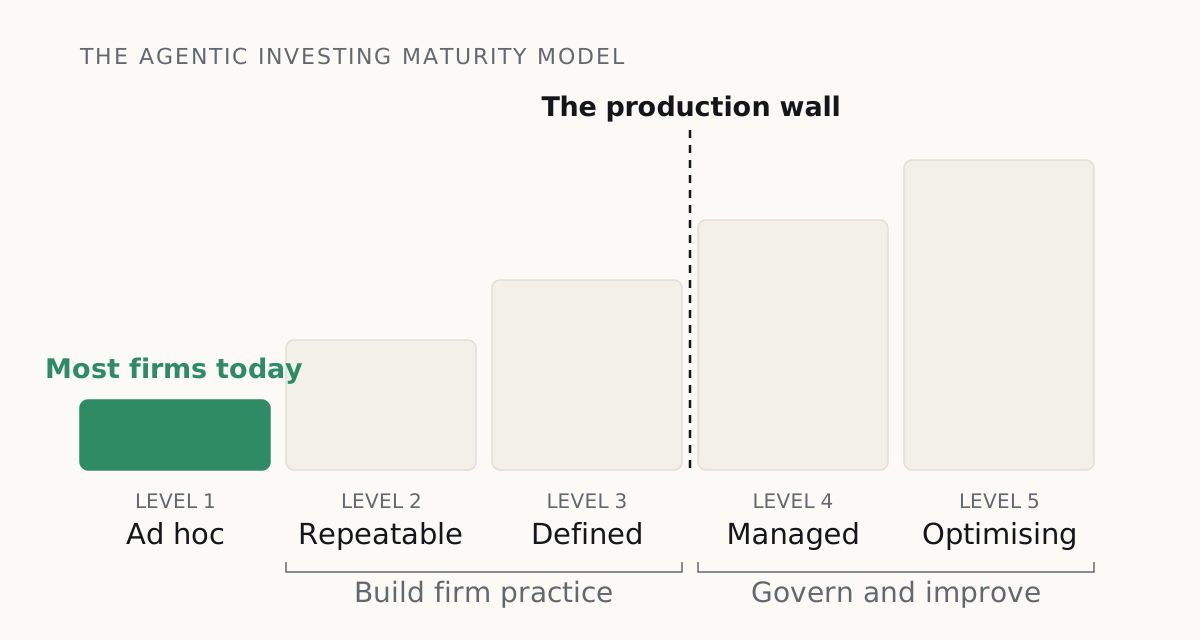
Adapted from AgenticInvestor’s Agentic Investing Maturity Model, v1.4.
SVV’s conversations with firms suggest that many are still at level one, with some repeatable practices beginning to emerge. The white paper presents this as practitioner observation, rather than survey data. Level one is a reasonable place to learn what AI is good for; the risk is that the learning stays with the individual.
At level two, a useful piece of work becomes repeatable. For a first screen, the task sets out the inputs, the checks to make, the expected output and the points where a person reviews it. Skills supply the firm’s screening criteria, scorecard and house rules. Someone other than the author should be able to run the task and produce a comparable result. That is more durable than a prompt kept in one person’s account.
At level three, the firm adopts those tasks as its normal way of working across a deal, from screening through to IC preparation. Each core task has a named owner who keeps it current, and the team agrees where an investor must review or make a decision. New joiners learn that playbook from the start. Anyone from a junior to a partner should apply the same process, deliver comparable outputs and leave work a colleague can inspect. The tasks and skills in the AgenticInvestor library give firms material to adapt to their own process.
The model describes a point at level three it calls the production wall. Once AI is doing real work on several live deals at the same time, the problem changes. Work is handed between people, and some of the context gets lost on the way because it was in someone’s notes or in a chat nobody else could see. Partners start asking who produced something and what it was based on, and that isn’t always easy to answer.
A written playbook doesn’t solve that, because it tells you how the work should be done but not where the work on a particular deal has got to. The model’s suggestion is a shared space for each deal, with approval steps and a record of who did what. It also says this can be a platform built for the purpose or a general-purpose, hand-rolled setup that a firm hardens itself.
We built Alludium in collaboration with SVV so a firm can start with shared deal work, rather than making collaboration a later project. Each deal is its own shared space, with tasks for the team and its AI agents. An agent does a first pass using the firm’s criteria, an investor reviews it, and the result stays with the deal alongside the sources used. Whoever picks up the next task can see what has already been done. The investment decision remains with the team.
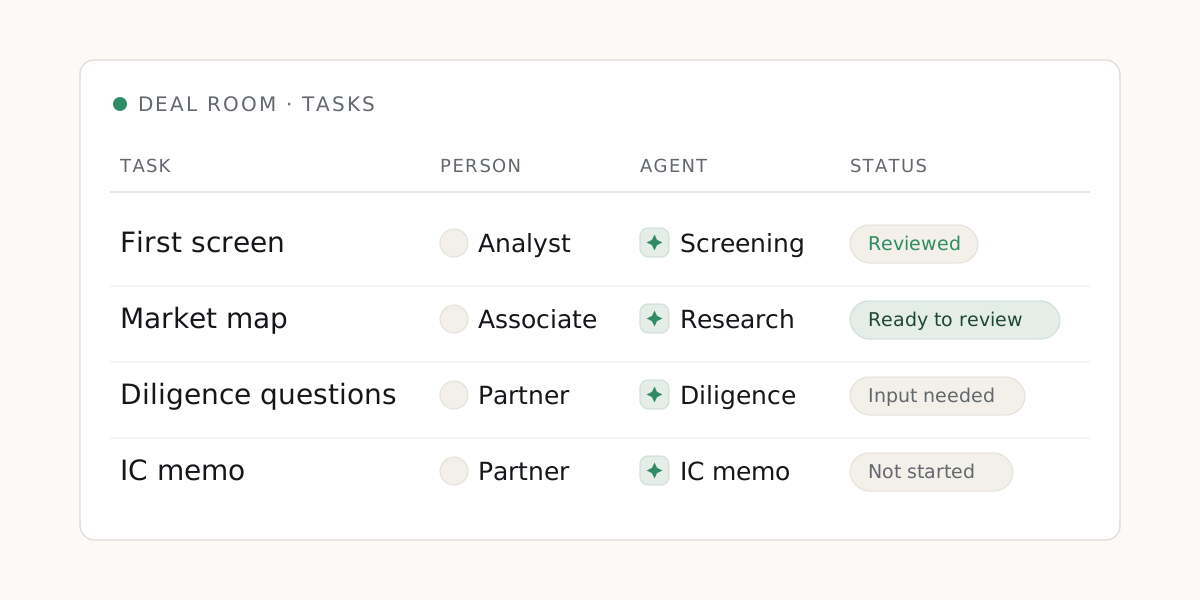
Illustration: each piece of work on a deal is a task with a person and an agent on it.
A firm can start with one live deal and one useful task in Alludium. The team can define its criteria, review the first result and keep the decision alongside the work, then extend that playbook as it learns. This lets the firm build repeatable practice and shared context together, instead of spending months assembling private tools before collaboration begins. It is a faster route towards the governed work AIMM describes at level four, and the feedback needed to improve it at level five.
Two new integrations, and connections that can be shared with the whole workspace.
AgenticInvestor launches with Sure Valley Ventures as a new open-source initiative for investor AI workflows, with Alludium as founding technology partner.
For most of the last two years, AI in a venture firm meant one person and a chat box. That's changing - the work itself becomes the thing you interact with.